

Pinterest for Flower Farmers: How to Drive Free Traffic to Your Website
Connect


Meet Izzy
You’ve poured your heart and soul into your business. Now it's time for people to connect with your work, but first, they need to see YOU. Let me help you
be SEEN.
Check out my best website design resource: the Ultimate Website Prep Checklist and Resource Guide. You can grab yours for free now!
Back to all Blog posts
October 5, 2026
If you’re a flower farmer and you’re not on Pinterest yet or you signed up but never really figured out what to do with it, this post is for you.
Pinterest is one of the most underused tools in the flower farming world. And it’s a shame, because visually stunning + searchable + free traffic? That combination was basically built for what you do.
Let’s talk about how to actually use it.
Why Pinterest Works So Well for Flower Farmers?
Most social media platforms are built around the feed content that gets seen for a day or a few weeks and then disappears. Pinterest is different.
Pinterest is a search engine. When someone pins your photo of a late-summer dahlia arrangement, that pin can drive traffic to your website for months, sometimes years, after you post it.
And here’s what makes it especially powerful for flower farmers:
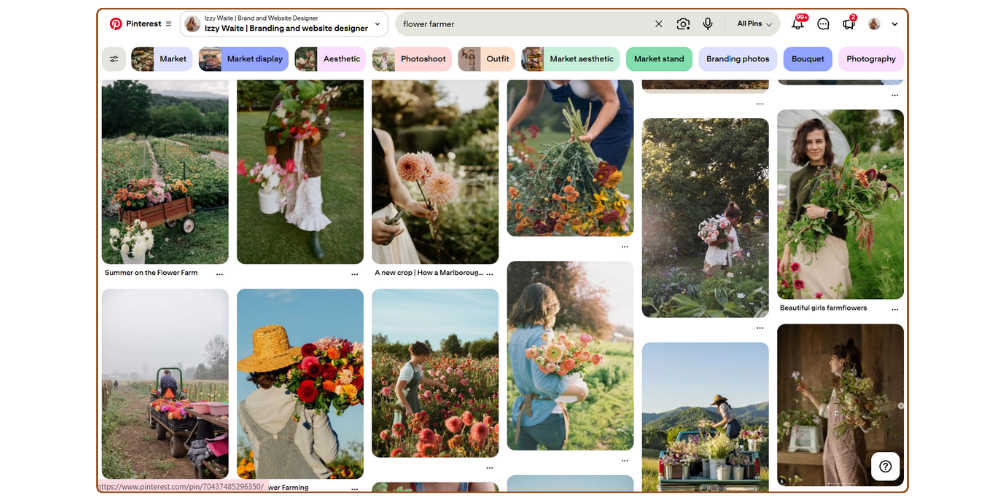
Your work is inherently beautiful. People search Pinterest for flower inspiration, bouquet ideas, seasonal blooms, and farm aesthetics every single day. You don’t have to manufacture content; you’re already creating it every time you harvest, arrange, or share your farm.
The question is just whether you’re linking it back to your website.
Step 1: Set Up a Business Account
If you’re using a personal Pinterest account for your farm, switch to a business account. It’s free and gives you access to analytics, so you can actually see what’s driving traffic.
Go to pinterest.com/business/create and set it up under your farm’s name. Add your website URL and verify it; this is what allows Pinterest to pull your branding onto your pins and helps Google trust the connection between your profile and your site.

Step 2: Create Boards That Match What People Search
Your boards are how Pinterest organizes your content and they’re also indexed by Google.
Think about what your ideal customer is already searching for:
- “Summer bouquet ideas”
- “Flower CSA subscription”
- “Flower farm aesthetic”
- “Dried flower arrangements”
- “What flowers are in season in [your state]”
Create boards around these topics. Use descriptive names and write a short paragraph in each board description using those same search terms naturally. This is one of the easiest wins for flower farm SEO that most people skip entirely.
Step 3: Pin with Purpose, Always Link Back to Your Website
This is the step that turns Pinterest from a pretty mood board into a real traffic driver.
Every pin you create should link to something on your website. Not just your homepage, a specific, relevant page.
Here are some examples:
Pin of a CSA bouquet → links to your CSA sign-up page.
Pin of a dried flower wreath → links to your shop or a blog post about dried arrangements
Pin of your farm in full bloom → links to your About page or a blog post about your growing season
Pin of a styled wedding setup → links to your wholesale or events inquiry page
The goal is to give Pinterest a reason to send people somewhere and give those people a clear next step when they arrive.

Step 4: Write Pin Descriptions That Actually Get Found
The photo stops the scroll. The description is what gets you found.
When you write a pin description, think like someone using a search bar. Include the name of the flower, the season, the color palette, the use case, and your location if it’s relevant.
For example, instead of: “Fresh summer blooms 🌸”
Try: “A mixed summer bouquet featuring dahlias, zinnias, and cosmos, grown on our small flower farm in [State]. Perfect for weddings, farmers markets, or a CSA share. Click to learn more about our flower CSA subscriptions.”
Longer, yes. But packed with the exact words someone would type to find you.
Step 5: Connect Pinterest to Your Blog Content
This is where Pinterest and your website strategy really start working together.
Every blog post you publish is a Pinterest opportunity. Write a post about what flowers are in season in summer, how to care for cut flowers at home, or how your CSA works, and create a pin for each one. A vertical image (2:3 ratio works best) with a clear title overlaid is all you need.
Blog posts live on your website forever. Pinterest pins point people to them forever. That’s compounding free traffic, and it’s one of the best investments of your time as a small farm business.
(If you haven’t started blogging for your flower farm yet, this post on the best website builders for flower farms can help you figure out where to build that foundation first.)
Step 6: Be Consistent, But Keep It Simple
You don’t need to pin 30 times a day. Consistent, quality pinning beats sporadic bursts every time.
A simple rhythm to start with:
- 3–5 new pins per week linked to your website or blog
- Repin seasonal content from other farms or floral accounts that aligns with your aesthetic
- Refresh older pins with new descriptions or updated links when you have a new offer or blog post live
Use a free scheduler like Canva or Pinterest’s own built-in scheduler to batch your pins and set them to go out throughout the week.
The Bigger Picture
Pinterest works best when it has somewhere worth sending people.
That means your website needs to be clear, beautiful, and easy to navigate so when someone clicks through from a pin, they actually stay, browse, and reach out.
If your site isn’t quite there yet, that’s the first thing worth fixing. Because the best Pinterest strategy in the world won’t convert if the website it points to isn’t doing its job.
For full branding and website design, check out our Website in a Week package
For quick turnaround changes to your website, check out the One Day Website Refresh.
Frequently Asked Questions
Does Pinterest actually drive traffic to small farm websites? Yes, and unlike Instagram or Facebook, Pinterest traffic compounds over time. A pin posted today can still bring visitors to your website a year from now because Pinterest functions as a search engine, not just a social feed. Flower farms are especially well-positioned because the visual nature of the content performs naturally well on the platform.
How often should a flower farmer post on Pinterest? Consistency matters more than volume. Aim for 3–5 pins per week linked to pages or blog posts on your website. Using a free scheduler to batch your content once a week makes this easy to maintain even during busy growing seasons.
Do I need a blog to use Pinterest for my flower farm? You don’t need one, but having a blog dramatically increases what Pinterest can do for you. Each blog post becomes a pin destination and blog content is what tends to rank on both Pinterest and Google over time. Even 1–2 posts a month about your farm, your flowers, or your CSA can make a real difference in how much organic traffic you attract.
Back to all Blog posts

Three Promises of Izzy Waite Design
Authentically You Branding
Collaborative & Fun Process
Don’t have it all figured out? That’s ok! My process will meet you where you’re at and help translate your ideas & vision into a brand you’ll love.
Results-Driven Design
By blending aesthetics with strategic design, we’ll make sure that your website not only looks amazing, but has a user-friendly layout that increases inquiries.